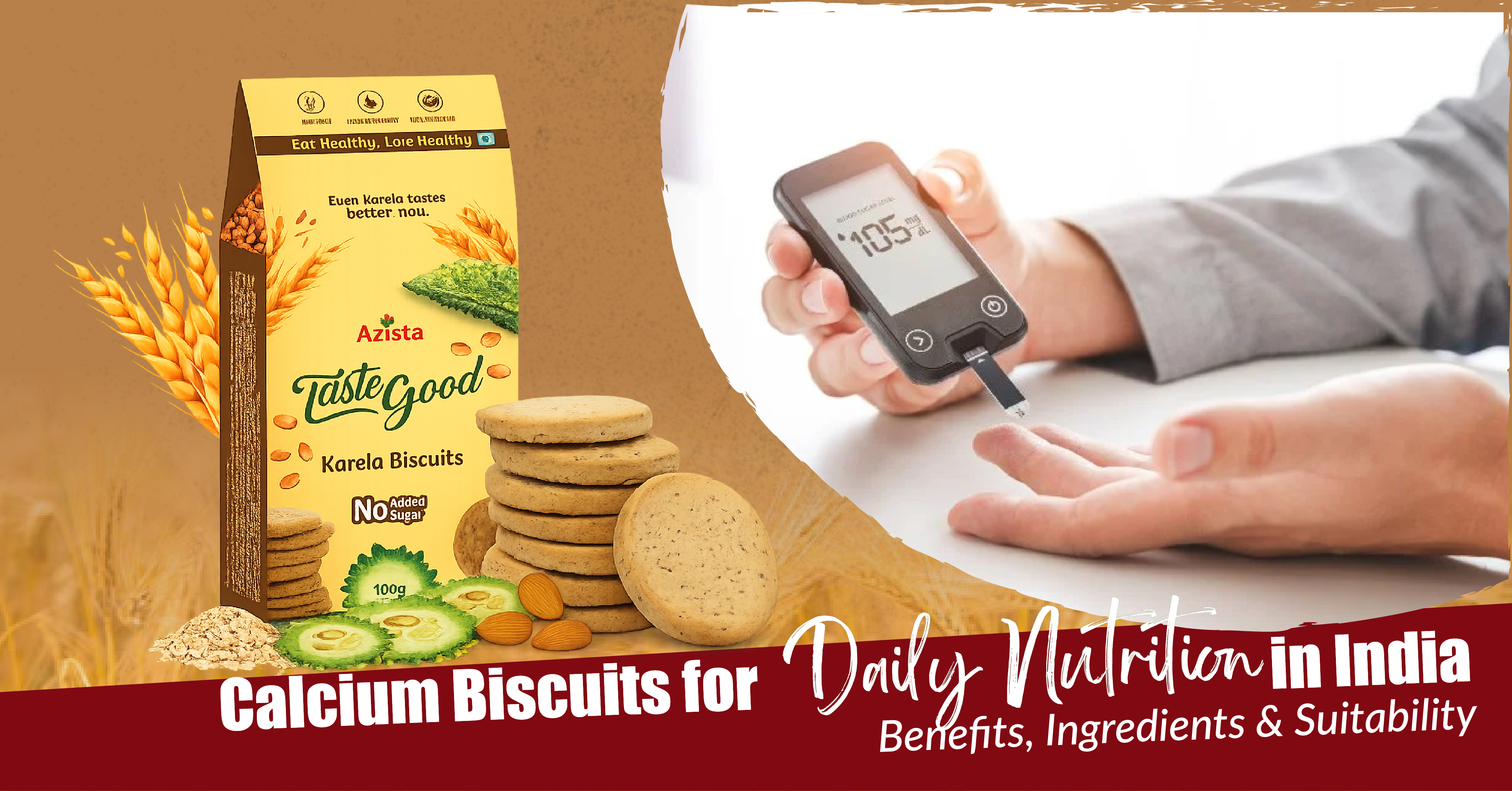
Calcium Biscuits for Daily Nutrition in India: Benefits, Ingredients & Suitability
Introduction
Calcium biscuits are increasingly used in India as a convenient nutritional supplement to support bone health and daily dietary needs. Commonly available as ragi biscuits, wheat biscuits, and whole wheat biscuits, they are designed to provide calcium and essential nutrients in an easy-to-consume format.
This article explains how calcium biscuits fit into daily nutrition, who may benefit from them, how they work, and their safety considerations. The content is educational and intended to support informed dietary choices—not medical treatment.
Disease Overview – Calcium Deficiency and Bone Health
What is Calcium Deficiency?
Calcium deficiency occurs when dietary intake or absorption of calcium is insufficient to meet the body’s needs. Calcium is essential for bone formation, muscle contraction, nerve transmission, and blood clotting.
Causes
Common causes include:
- Low intake of calcium-rich foods
- Poor absorption due to vitamin D deficiency
- Increased needs during growth, pregnancy, or ageing
- Dietary restrictions or limited food variety
Symptoms and Health Impact
Mild deficiency may show no symptoms, while long-term deficiency can contribute to:
- Weak bones and teeth
- Increased fracture risk
- Muscle cramps or fatigue
- Reduced peak bone mass in children
Calcium deficiency is a public health concern in India due to dietary patterns and lifestyle factors.
Treatment Overview – Nutritional Approaches
General Management of Low Calcium Intake
Management typically focuses on:
- Improving dietary calcium intake
- Using fortified foods
- Ensuring adequate vitamin D levels
- Lifestyle measures such as physical activity
Where Calcium Biscuits Fit In
Calcium biscuits in India are positioned as nutritional support, not as medical therapy. They can help bridge dietary gaps, particularly for individuals who may not consume enough dairy or calcium-rich foods regularly.
How Calcium Biscuits Work
High-Level Mechanism of Action (Non-Clinical)
Calcium biscuits work by delivering elemental calcium through fortified cereal-based products, which the body absorbs during digestion.
Key features include:
- Calcium fortification for bone support
- Cereal bases (ragi or wheat) that provide energy
- Additional micronutrients in some formulations
Ragi biscuits are especially valued because ragi (finger millet) naturally contains higher calcium levels compared to many other grains.
Ingredients Commonly Used in Calcium Biscuits
Typical ingredients may include:
- Calcium salts (e.g., calcium carbonate)
- Ragi flour or whole wheat flour
- Wheat flour or multigrain blends
- Fibre sources
- Minimal added sugars and fats (varies by product)
Whole wheat biscuits are often preferred for their fibre content and slower energy release.
Safety and Usage Overview
Are Calcium Biscuits Safe for Daily Use?
For most healthy individuals, calcium biscuits are considered safe when consumed in moderation as part of a balanced diet.
Important considerations:
- Avoid excessive calcium intake from multiple sources
- Check labels for sugar and fat content
- Individuals with kidney disorders should seek medical advice
Who May Benefit Most?
- Children and adolescents during growth
- Adults with low dietary calcium intake
- Older adults concerned about bone health
- Individuals with limited dairy consumption
Common User Questions
Can Calcium Biscuits Replace Calcium Supplements?
No. Calcium biscuits are nutritional foods, not pharmaceutical supplements. They may help support intake but should not replace prescribed supplements when medically indicated.
Are Ragi Biscuits Better Than Wheat Biscuits?
Ragi biscuits naturally contain more calcium, while wheat biscuits offer fibre and energy. The choice depends on dietary needs, taste preference, and overall nutrition goals.
Frequently Asked Questions
What are calcium biscuits used for?
Calcium biscuits are used to support daily calcium intake and overall nutrition, especially when regular diets may not provide adequate calcium.
Are calcium biscuits suitable for children?
Yes, many calcium biscuits are formulated for children, but portion size and sugar content should be monitored.
Can calcium biscuits improve bone health?
They may contribute to bone health as part of a balanced diet but are not a treatment for bone diseases.
How often can calcium biscuits be eaten?
They can be eaten occasionally or daily in moderation, depending on nutritional needs and total calcium intake.
Do whole wheat biscuits contain calcium?
Whole wheat biscuits may contain calcium, especially if fortified, but levels vary by product.
Key Takeaways
- Calcium biscuits provide convenient nutritional support
- Ragi biscuits offer naturally higher calcium content
- Wheat and whole wheat biscuits add fibre and energy
- Suitable for multiple age groups when used responsibly
- Not a substitute for medical treatment or supplements
Conclusion
Calcium biscuits play a supportive role in daily nutrition by helping bridge dietary calcium gaps through familiar, easy-to-consume foods. Whether in the form of ragi biscuits, wheat biscuits, or whole wheat biscuits, they can complement balanced diets across age groups when used appropriately.
For readers interested in nutritional health, bone wellness, or fortified foods, exploring related articles on calcium-rich diets, bone health nutrition, or micronutrient deficiencies can provide further valuable insights.