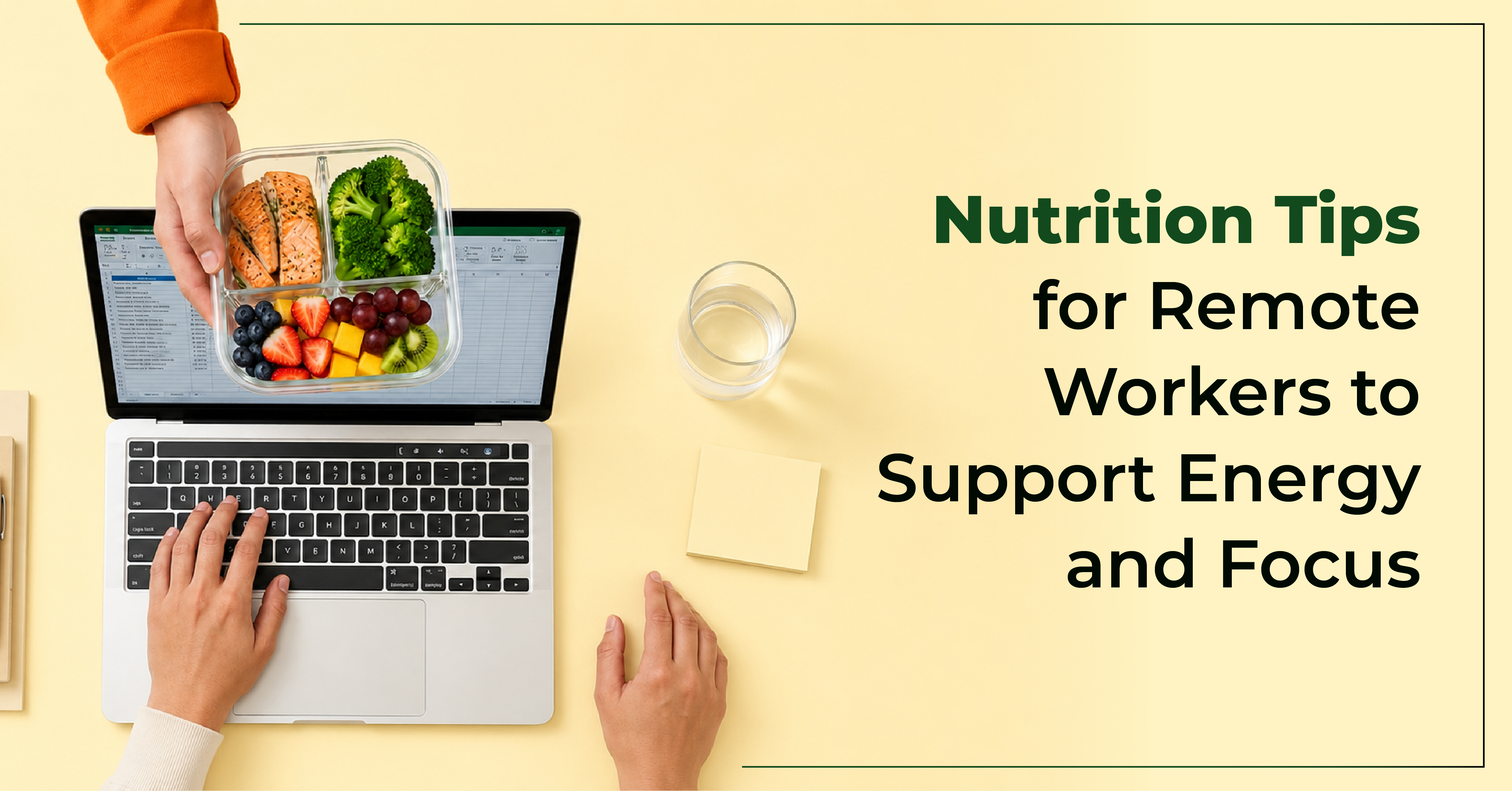
Nutrition Tips for Remote Workers to Support Energy and Focus
Working from home has changed daily routines for many professionals. While remote work offers flexibility, it can also lead to irregular eating patterns, constant snacking, skipped meals, and reduced physical activity.
Many professionals struggle to maintain healthy eating habits when home and work environments overlap. Easy access to snacks, long screen hours, and busy schedules may affect energy levels, productivity, and overall wellbeing.
The good news is that simple nutrition strategies can support better focus, balanced energy, and healthier routines throughout the workday.
This article covers:
- Practical nutrition tips for remote workers
- Healthy work from home diet strategies
- Balanced meals for professionals
- Healthy snacking at work
- Meal planning ideas for busy schedules
- Productivity boosting foods for daily wellness
Why Nutrition Matters for Remote Workers
Nutrition plays an important role in maintaining concentration, energy, and overall work performance. Poor eating habits may contribute to fatigue, reduced focus, and frequent energy crashes during the day.
Common Nutrition Challenges While Working from Home
Remote professionals often experience:
- Skipping breakfast
- Frequent snacking
- Eating while distracted
- Irregular meal timings
- Increased consumption of processed foods
- Reduced hydration
Over time, these habits may affect both physical and mental wellbeing.
How Balanced Nutrition Supports Productivity
A healthy lifestyle nutrition approach may help support:
- Stable energy levels
- Improved concentration
- Better mood balance
- Reduced cravings
- Consistent work performance
Balanced eating patterns can also support long-term wellness alongside remote work routines.
Healthy Work From Home Diet Strategies
A healthy work from home diet does not need to be restrictive or complicated. Consistency and meal balance are often more important than perfection.
Start the Day with a Balanced Breakfast
Skipping breakfast may lead to mid-morning fatigue and unhealthy snacking.
Balanced breakfast ideas include:
- Oats with fruit and nuts
- Wholegrain toast with eggs
- Yoghurt with seeds and berries
- Smoothies with protein and fibre
Breakfast helps provide energy and may improve concentration during early work hours.
Avoid Long Gaps Between Meals
Busy professionals sometimes delay meals due to meetings or deadlines. However, long gaps without eating may increase cravings and overeating later in the day.
Planning regular meals and snacks may help maintain energy balance throughout the workday.
Build Balanced Meals for Professionals
Balanced meals typically include:
- Lean proteins
- Whole grains
- Vegetables
- Healthy fats
- Fibre-rich foods
Examples of balanced lunches for remote workers include:
- Brown rice with vegetables and lentils
- Grilled chicken or tofu salads
- Wholegrain wraps with hummus and vegetables
- Quinoa bowls with mixed vegetables
Balanced meals may help support steady energy and satiety.
Healthy Snacking at Work Without Overeating
Snacking is common while working from home, especially during long screen hours. However, mindless snacking may increase calorie intake without providing proper nutrition.
Choose Nutrient-Dense Snacks
Healthy snacking at work may include:
- Fresh fruit
- Roasted nuts
- Plain yoghurt
- Roasted makhana
- Vegetable sticks with hummus
- Boiled eggs
These foods provide nutrients and may help reduce cravings for highly processed snacks.
Avoid Eating Directly from Packets
Eating directly from large snack packets can make portion awareness difficult.
Helpful strategies include:
- Portioning snacks into bowls
- Keeping healthy snacks nearby
- Limiting processed snack purchases
- Drinking water before snacking
Simple habits may help prevent unnecessary overeating.
Productivity Boosting Foods for Busy Professionals
Certain foods may support concentration and sustained energy during work hours.
Foods That Support Energy and Focus
Productivity boosting foods often include nutrients such as protein, fibre, healthy fats, and complex carbohydrates.
Examples include:
- Oats
- Nuts and seeds
- Bananas
- Eggs
- Leafy vegetables
- Fatty fish
- Whole grains
These foods may help maintain steady energy levels throughout the day.
Stay Hydrated During Work Hours
Dehydration may contribute to headaches, fatigue, and reduced concentration.
Remote workers should aim to:
- Keep water nearby
- Drink fluids regularly
- Limit sugary beverages
- Balance caffeine intake
Hydration is an important part of work from home wellness.
Meal Planning for Busy Professionals
Meal planning can make healthy eating more manageable for remote workers with demanding schedules.
Why Meal Preparation Helps
Planning meals in advance may help:
- Reduce reliance on takeaway foods
- Improve portion control
- Save time during workdays
- Support healthier food choices
Even simple preparation can improve consistency.
Practical Meal Planning Ideas
Busy professionals may benefit from:
- Preparing ingredients ahead of time
- Cooking extra portions for leftovers
- Keeping healthy snacks available
- Creating simple weekly meal plans
Examples of easy meal-prep foods include:
- Cooked grains
- Chopped vegetables
- Boiled eggs
- Lentils and beans
- Homemade soups
Work From Home Wellness Beyond Nutrition
Nutrition is only one part of maintaining wellbeing while working remotely.
Combine Healthy Eating with Daily Movement
Long periods of sitting may affect posture, energy, and circulation.
Helpful wellness habits include:
- Taking short walking breaks
- Stretching between meetings
- Standing periodically during work
- Maintaining regular sleep routines
Combining movement with balanced nutrition supports overall health.
Create Structured Eating Habits
Working near the kitchen may encourage constant grazing throughout the day.
Structured meal routines may help remote workers:
- Reduce distracted eating
- Improve portion awareness
- Maintain healthier eating habits
Eating away from the workstation may also encourage more mindful meals.
Common User Questions About Remote Work Nutrition
What is the best healthy work from home diet?
A healthy work from home diet typically includes balanced meals with protein, fibre, vegetables, healthy fats, and whole grains while limiting highly processed foods.
How Can Remote Workers Avoid Constant Snacking?
Planning regular meals, choosing nutrient-dense snacks, drinking enough water, and avoiding distracted eating may help reduce unnecessary snacking.
Are Productivity Boosting Foods Scientifically Proven?
Certain nutrient-rich foods may support concentration and steady energy levels as part of an overall balanced lifestyle.
Is Meal Planning Necessary for Busy Professionals?
Meal planning is not mandatory, but it may help improve consistency, reduce stress, and support healthier eating habits.
FAQ's
What are the best nutrition tips for remote workers?
Balanced meals, healthy snacks, hydration, regular eating schedules, and meal planning are among the most effective nutrition strategies for remote workers.
How can professionals maintain healthy eating habits while working from home?
Creating structured meal routines, preparing meals in advance, and limiting processed snacks may support healthier eating patterns.
Which foods help improve productivity during work?
Whole grains, fruits, vegetables, nuts, seeds, eggs, and protein-rich foods may support steady energy and concentration.
How often should remote workers snack?
Snacking needs vary by individual. Balanced snacks between meals may help maintain energy levels when needed.
Why is hydration important for work from home wellness?
Proper hydration supports concentration, energy, and overall physical function during long work hours.
Key Takeaways
- Remote work may affect eating habits and activity levels.
- Balanced meals for professionals support energy and focus.
- Healthy snacking at work can reduce unnecessary cravings.
- Meal preparation may improve consistency and food choices.
- Productivity boosting foods support sustained energy.
- Work from home wellness includes both nutrition and movement.
Conclusion
Maintaining healthy eating habits while working remotely can feel challenging, especially with busy schedules and constant access to food. However, small, practical changes may support better energy, focus, and long-term wellbeing.
Balanced meals, mindful snacking, hydration, and meal planning can help remote professionals build healthier daily routines without unnecessary restriction.
For more healthy lifestyle nutrition guidance and wellness tips, explore additional articles on Taste Good.